
Not all mushroom extracts are created equal—and when it comes to Apán, the difference between wild-harvested and cultivated sources isn’t just a marketing detail. It shapes the compound profile, the potency, and ultimately how the extract supports your body. If you’ve been comparing Apán products and wondering why some brands emphasize “wild-harvested” so heavily, this guide breaks down what that actually means and why it matters.
Wild Apán mushroom grows in its natural forest environment, without human intervention in its growing conditions. Unlike cultivated mushrooms raised in controlled settings—often on substrates like sawdust or grain—wild Apán develops in response to the actual pressures of its ecosystem: fluctuating temperatures, seasonal moisture, competing organisms, and the specific mineral makeup of its native soil. That environmental complexity is part of what gives wild-harvested fungi their distinct character.
The core difference comes down to three things: potency, compound diversity, and environmental stress response.
None of this means cultivated mushrooms are without value—cultivation offers consistency and scalability that wild-harvesting can’t always match. But for a brand built around potency and full-spectrum compound profiles, wild-harvested Apán is the foundation we start from.
Wild-harvesting only makes sense long-term if it’s done responsibly. At LiveNativ, our Apán is wild-harvested using ethical and sustainable practices designed to protect the health of the forest ecosystems it comes from. Responsible wild-harvesting means taking only what allows the mycelial network and surrounding habitat to continue thriving season after season—not stripping a location bare for a single harvest.
This is also why wild Apán can’t be mass-produced the way cultivated mushrooms can. Sustainable sourcing takes time, relationships with the land, and a willingness to harvest less in order to protect more.
Because “wild-harvested” has become a popular label in the wellness industry, it’s worth knowing what to actually look for when evaluating an Apán product.
You can read more about how we approach sourcing and formulation on our science behind Apán page, which walks through the reasoning behind our extraction process.
Once you’ve chosen a wild-harvested Apán extract, dosing becomes the next question. Our Apán+ Max Daily liquid extract is designed around three levels of use, depending on your goals: Daily Wellness (4 droppers/day), Enhanced Support (8 droppers/day), and Deep Healing (12 droppers/day), with each dropper measuring approximately 4 ml. If you’re new to Apán, starting at the Daily Wellness level and adjusting based on how your body responds is a reasonable approach. For a more detailed breakdown of how to choose your dose, see our guide on tailoring Apán dosage to your health goals.
If you’re looking for a broader botanical approach alongside or instead of Apán, our Herbal Immune Power blend combines complementary botanicals formulated to support the body’s natural defenses.
Wild-harvested Apán liquid extract is formulated for daily use and is crafted from all-natural ingredients. As with any wellness supplement, consult your healthcare provider before use, especially if you are pregnant, nursing, taking medications, have a medical condition, or have a known allergy to any of the ingredients.
Wild-harvesting is slower, less predictable, and harder to scale than cultivation. It requires seasonal timing, ecological knowledge, and a commitment to sustainable practices that protect the source environment—all of which raise cost and complexity compared to farming mushrooms in a controlled facility.
Dosing depends on your wellness goals. Our FAQ page and dosage guide both walk through the three usage levels—Daily Wellness, Enhanced Support, and Deep Healing—so you can choose the one that fits where you’re starting from.
Wild-harvested Apán isn’t just a sourcing preference—it’s a foundational choice that shapes everything downstream, from compound diversity to how the extract fits into your daily routine. Understanding that difference is the first step toward choosing a product that actually matches what you’re looking for.
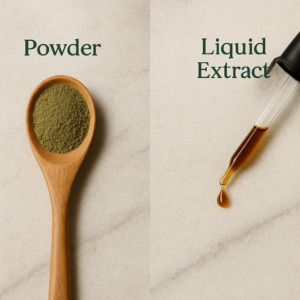
When choosing herbal supplements, the form matters more than you might think. Whether you’re using Apan mushrooms, adaptogens,...

Quick answer: Functional mushrooms like reishi, chaga, lion’s mane, and Apán are botanically unrelated to psilocybin-containing “magic mushrooms”...
Put the research into practice
Our wild-harvested Apán+ Max Daily and Herbal Immune Power put these botanicals to work — high-potency liquid extracts, ethically sourced.
Shop LiveNativDISCLAIMER: Any statements have not been evaluated by the Food & Drug Administration. This product is not intended to diagnose, treat, cure, or prevent any diseases.